
Challenge
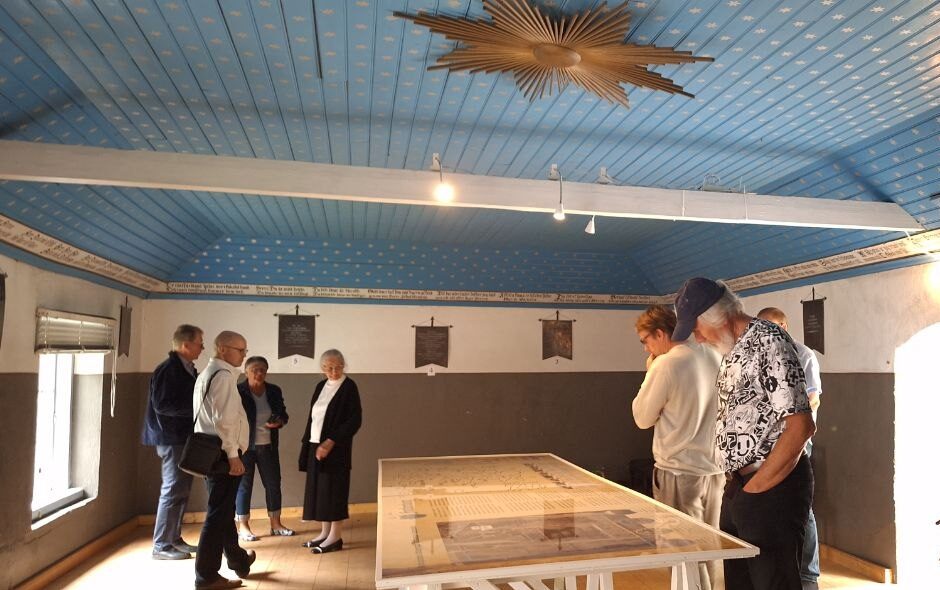
Finkenberg was a project commissioned by Nagu Hembygdsförening with the aim of creating a museum in the Finkenberg burial chapel, located in the Nauvo cemetery next to the church. The space was renovated and local associations received funding to establish a museum that tells the story of the history and significance of the Finkenberg royal family on the island.
The challenge was to present history to visitors in a clear and interesting way in a small space – so that the content is visitor-friendly, visually appealing, and historically accurate.
- Turning historical fragments into a comprehensible story
- An exhibition experience that works for independent visitors
- Visual appearance and materials that make the content easy to understand
- Factual accuracy in collaboration with official historical actors
When the story, structure, and visuals are clear, history becomes an experience.
Solution: what UUDLY did
1. Conceptualization and storytelling (curation)
We curated the framework and narrative of the exhibition: what to convey, in what order, and in what manner, so that visitors could understand the whole even without a guide. The focus was on creating a visitor-friendly experience in which historical fragments are brought to life through storytelling and visual imagery.
2. Focus and themes of the exhibition
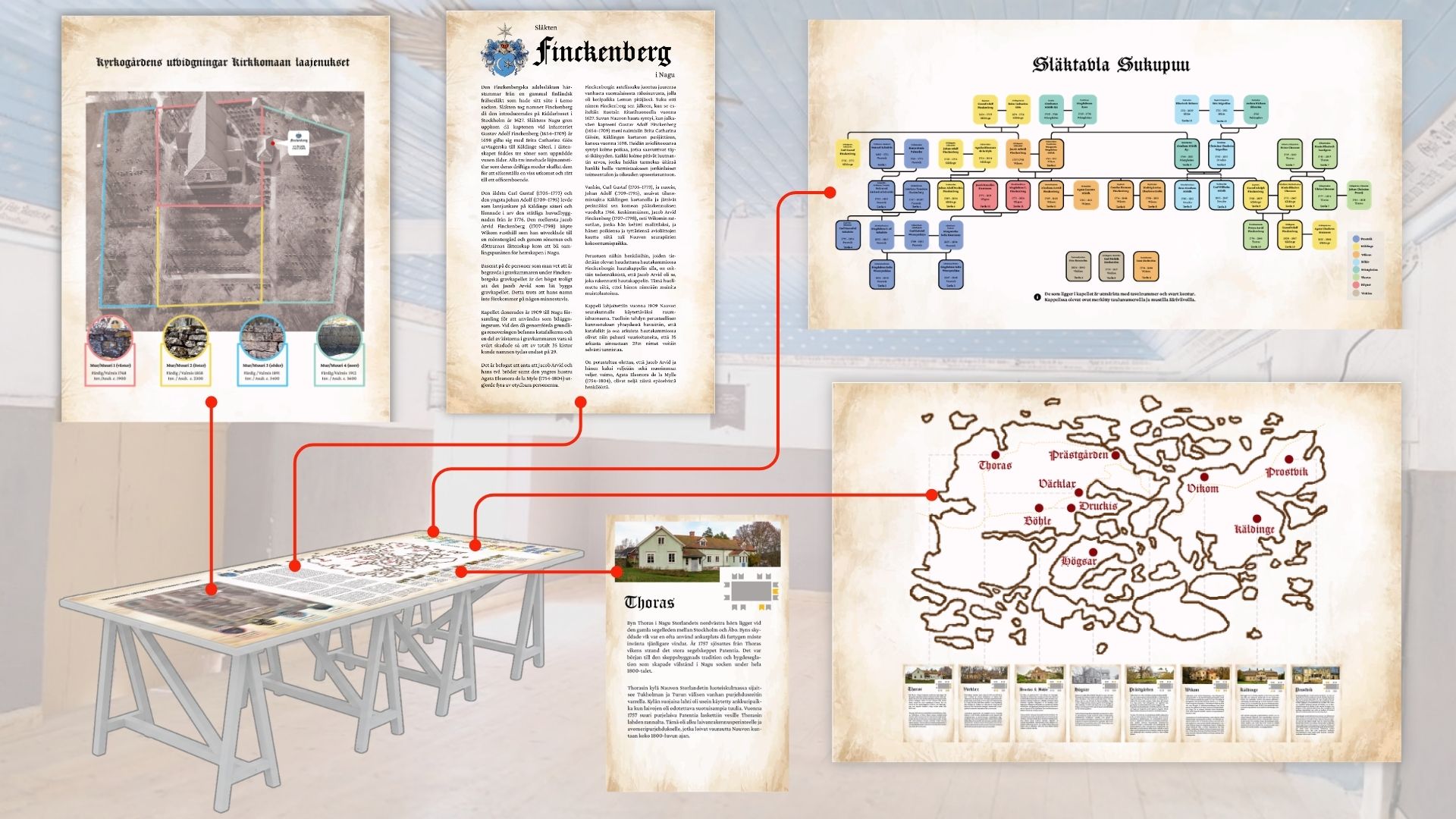
The centerpiece of the exhibition is a specially designed focal point approximately 4 meters long, which was divided into themes:
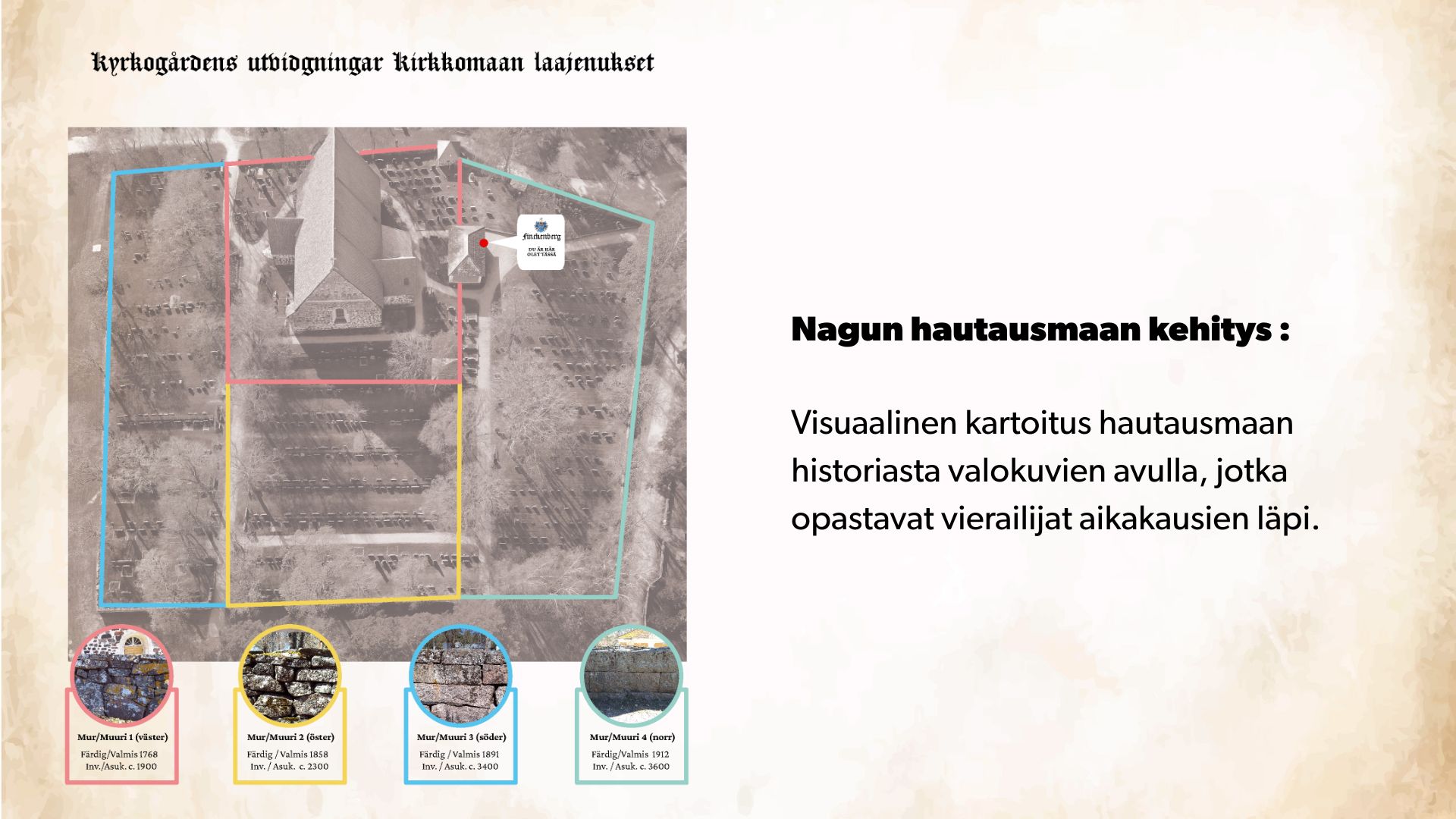
- The development of the Nauvo cemetery: A visual survey of the cemetery's history through photographs that guide visitors through the ages.
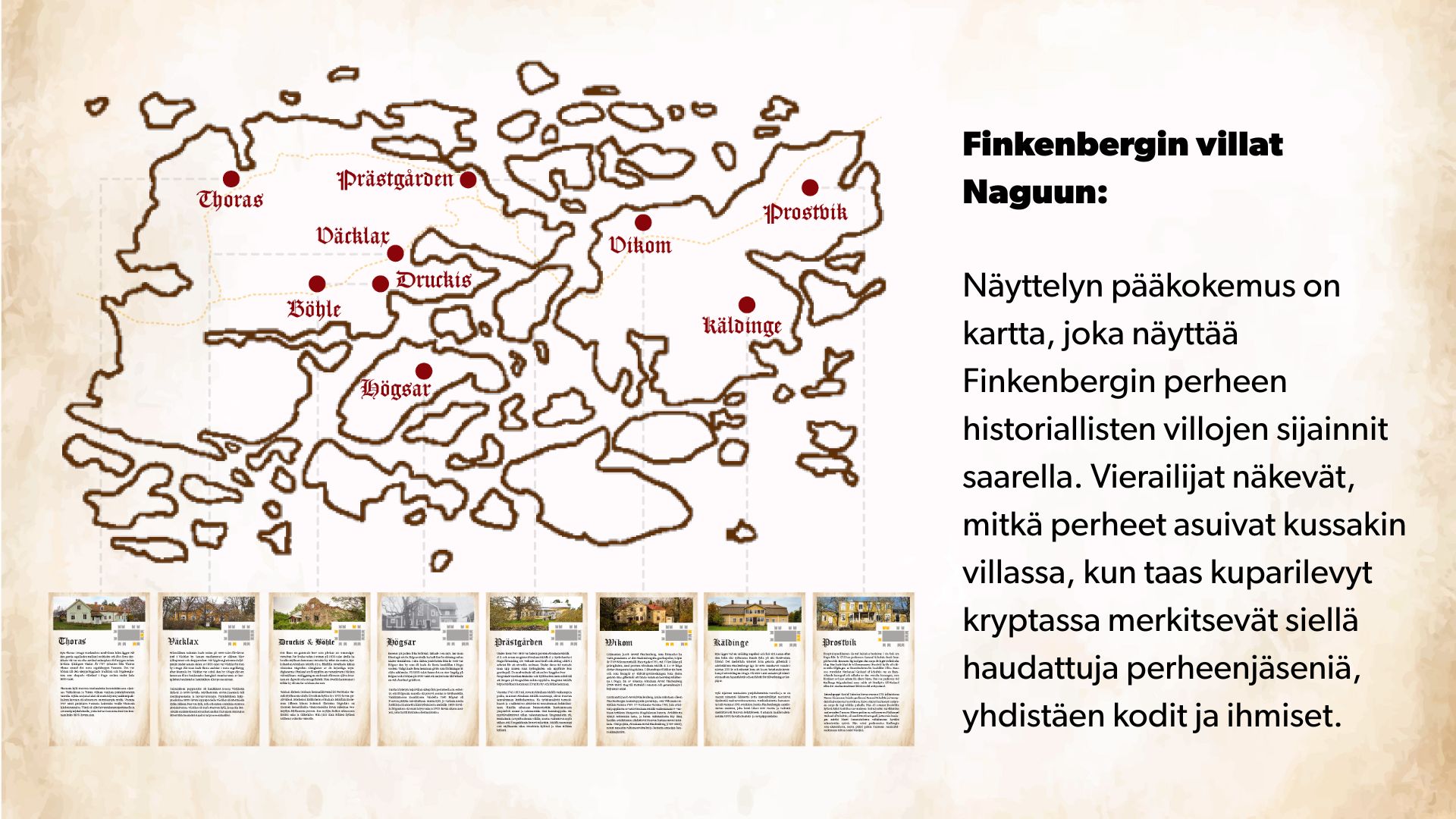
- Finkenberg villas in Nauvo: The main feature of the exhibition is a map showing the locations of the Finkenberg family's historic villas on the island. Visitors can see which families lived in each villa, and the copper plates in the cemetery chapel mark the family members buried there – thus connecting homes and people.
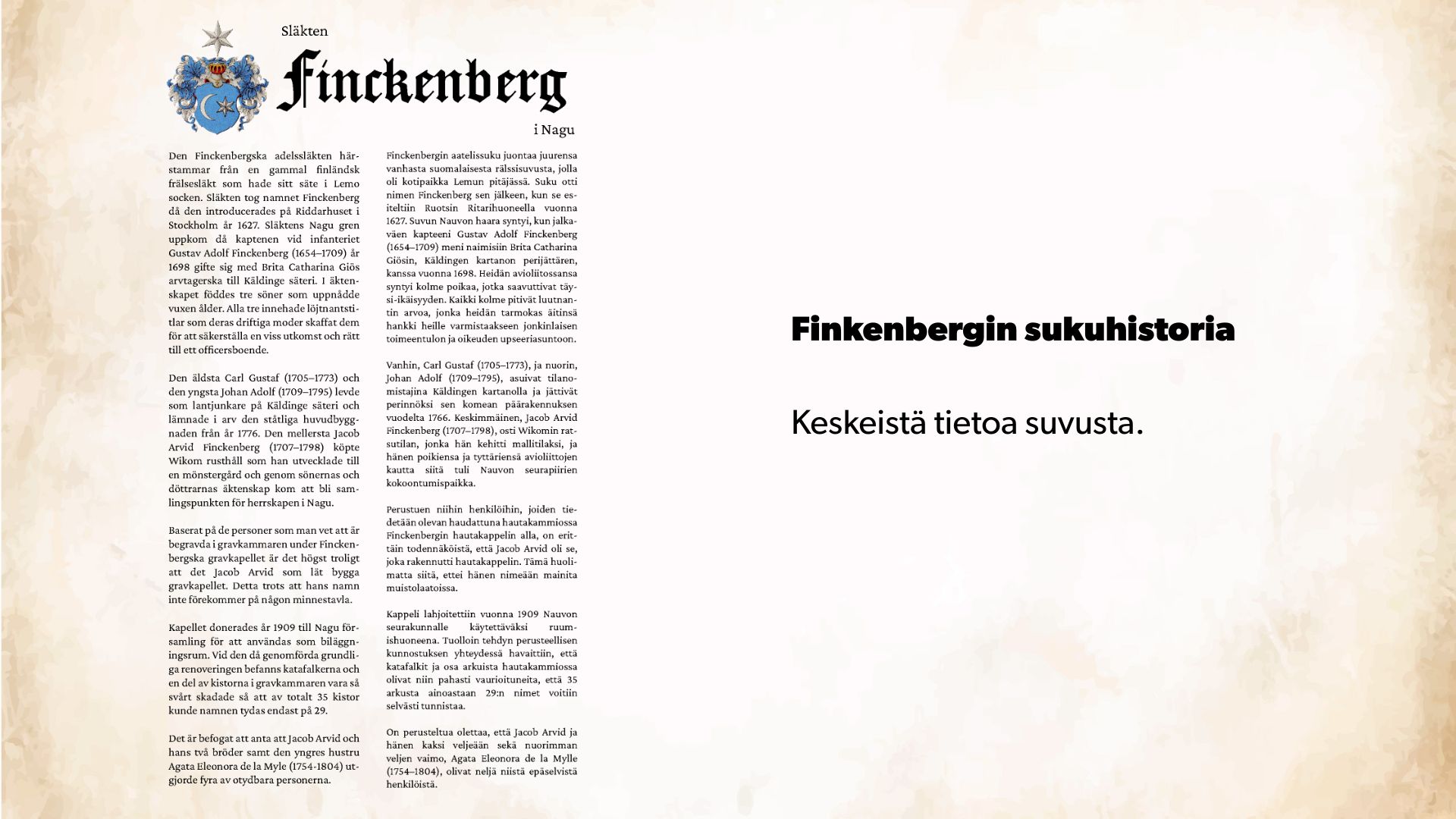
- Finkenberg family history: Key information about the family and its significance.
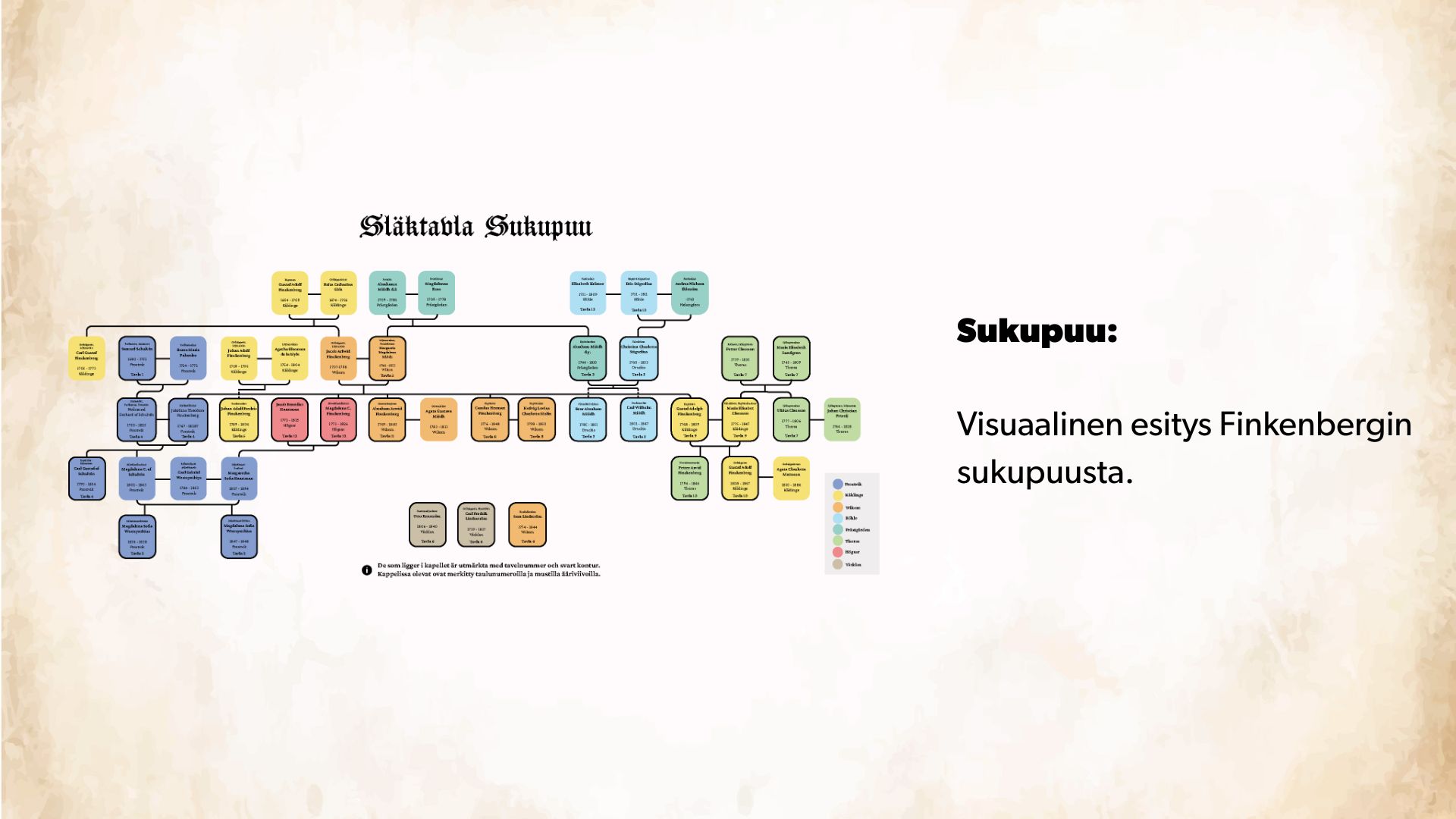
- Family tree: Visual representation of the Finkenberg family tree.
3. Visual appearance and printed materials
We designed the visual materials for the exhibition and produced printed guide and marketing materials. The whole exhibition was constructed in such a way that it is easy and pleasant to move around the space and familiarize oneself with the themes.
4. Cooperation and fact checking
The work was carried out in close cooperation with the local community, and the graphics and historical material were reviewed together with the Helsinki House of Nobility.
Results
The end result is an exhibition that makes history clear and tangible: maps, copper plates, and family trees connect places and people. The exhibition works well for independent visitors in a small space and has been constructed in collaboration with others to ensure that the content and visuals are historically accurate.
What we did
- Collection of historical data from the Nauvo Historical Society and local organizations
- Selection and curation of relevant materials from exhibition materials
- Content storytelling and conceptualization
- Design and implementation of the visual centerpiece of the exhibition
- Production of printed guide and marketing materials
- Close cooperation with the local community and official historical actors
Would you like history to become an experience?
When the story, structure, and visuals are clear, visitors understand the whole and remember something from the experience. Tell us about your space and materials, and we will give you practical suggestions for the next steps in creating an exhibition or guided tour.
No commitments. Let’s respond pragmatically: what should be done next and why.