
Your Brand is what people think and associate with Your Business.

So what do you want people to think?
So what do you want people
to think?
UUDLY Graphic Design animated svg

Branding is often thought of as the visual aspect of a brand but without a clear message directed to a carefully selected audience many visuals can pass completely without notice.

  • A brand is not solely a logo or packaging.
  • A brand is not a portfolio or CV.

Your brand is the sum total of your visuals, messages and interactions across all touchpoints.

Exercise:
Write a few words about how you’d like people to perceive your brand.

Branding Animation of a man with his brand strategy.

Brand strategy

The blueprint for your brand
1. Define Your Brand Core (self reflection)

Defining your brand’s core values, purpose, mission and vision are the first steps in the process of creating your Brand.

Here is where you should start also when making adjustments to your current Brand or when doing a rebranding.

  • Purpose, Mission, Vision 
    • Why does my brand exist?
    • How does my brand intend to impact society?
    • What does the future look like for my brand?
    • How do I create that future?
  • Values
    • Core values are the beliefs that you, as a brand can stand by and that guide your brand story, actions, behaviors, and decision-making process.
  • Brand story
    • You are perhaps not the only one with this business idea in your area, but there is only one you!
    • A brand story can be about how you through life and personal growth came to the decision to work with the health care sector. It can be about how your idéa helps to solve a problem.
    • A brand story’s purpose is to help you connect with your audience and feel relatable.

2. Messaging (articulation)

Write messaging that resonates with your core and relates to your audience.

In the previous step we found your brand story, now it’s time to think about how to communicate that story in a relatable and compelling way to your target audience.

  • Target audiences (Brand personas in the health care sector)
    • Who are the people are that you want to reach. What are they like, what do they like and what needs do they have?
  • Brand Voice
    • An NGO working with mental health doesn’t sound the same as spa center.
      To connect with your audience you need to sound authentic and relatable.
  • Personality
    • Who is the voice that narrates your brand story?
  • Naming
    • Give you brand or service or products names that are rememberable, descriptive and clear.
  • Tagline
    • The tagline is the extension of your brand by which people will remember you.
    • In a couple of words, what your intention.
  • Value proposition
    • Which are the functional and emotional benefits that you offer? 
    • Supports the tagline.
  • Messaging pillars 
    • Supports the value prop.
    • Which are the main selling points of your products and or brand?
    • Dissecting your value proposition further. 
    • Becomes more important for online texts.
3. Identity (presentation)

Support your strategy visually with an identity that is uniquely you!

Before diving into your Brand identity and creating a logo as the first thing it’s really important that you have your brand core and messaging mapped out.

In other words, the brand core and the brand messaging can be seen as your Brand strategy and the brand identity are the tools to visually support that strategy.

Show your Brand!

  • Your brand identity is how you look to the world.
    • Images and graphics communicate on a sensorial level. This is why so many people take their decisions based on what they see before they have even tasted the food, listened to the sales pitch or tried the product.
  • Remember that looking appealing to one target group can make you look really unappealing to another and before you know it, you might have alienated a huge crowd.
    • This is why you have to be certain that your identity or image matches that of your strategy.

Your brand also needs guidelines and an aesthetic that is recognizable and consistent across all the touchpoints were you are visible.

When designing your identity you will need a comprehensive visual language that can be applied to everything from your website and Instagram pics to your billing, packaging or even store front. This is called a Brand style guide.

At https://brandingstyleguides.com you can see examples.

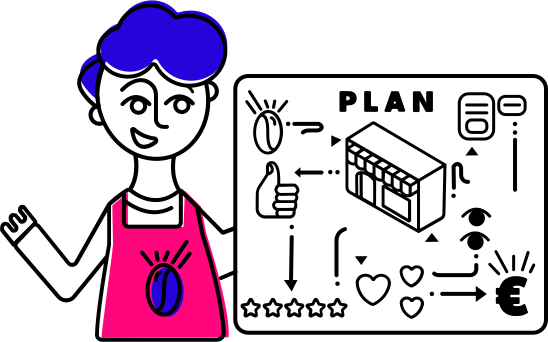
Branding: Cafe owner serving a cup of coffee.

Marketing

We think that it’s better to start with a couple of carefully selected touchpoints and develop them first. Otherwise you risk spreading yourself thin or burning out trying to stay relevant all over.

Your brand lives both on the touchpoints that you have created, but also in the minds of everyone that comes across your brand.

Competitor analysis and Positioning.

Make a market study.
This will help you identify best practices that you can use in your touchpoints.

Make hypotheses, study your competitors, search data in your industry, research, make interviews with potential target groups who don’t yet know your brand /service.

The following example cases show what brand elements and touchpoints could be considered when starting out.

Yoga & Physical Therapy Studio
  • Brand style guide:
    • Logo
    • Colors
    • Typography
    • Photography…
  • A dynamic multi-paged website with:
    • Booking & payment system.
    • Membership section with restricted membership content.
    • Webshop for classes and health related items.
  • Venue and instructor presentation videos and video classes.
  • Venue photography.
  • Social Media
  • Google Business Profile.
  • Facebook and Google ads campaigns.
  • Newsletters and email marketing.
  • Marketing strategy.
Visual Artist with workshops
  • Brand style guide
  • Website with:
    • Artist presentation (brand story)
    • Portfolio page
    • Webshop for:
      • Prints with print on demand connection.
      • Workshops / bookings
    • Contact page with form
    • Eventual Instagram integration. For storytelling, creation process.
    • Eventual Blog for deeper reflections.
  • Social Media (Plan first!)
  • Google business profile
  • Email marketing
  • Google ads and Facebook ads for workshops
  • Printed material
    • Creative brochure about the workshops.
    • Business card and handout.
  • Marketing strategy
FREE TOOL

Are you ready to take control and start branding?

In early 2025 we will be launching an online worksheet for brand creation. It will guide you through the 3 steps of creating a brand strategy and give you the fundaments upon which you can create your brand identity.

Sign up to get notified about the launch!